Resources

Library

Reports, studies, guides and toolkits produced by ITPC-MENA and its partners on HIV, access to treatment and health in the region. Each document is available in the languages in which it was published.

25 publications

Governance, advocacy and financing

Defining, Not Receiving – Perspectives on Health Governance Reform in the Middle East & North Africa

Research reportJuly 2026

This report examines health governance challenges in the MENA region, including institutional fragmentation, underfunded prevention and limited civil society participation in decision-making. It highlights the gap between evidence and policy implementation, as well as the impact of conflict and displacement. It calls for stronger regional coordination, needs-based health financing and institutionalised community participation.
Community monitoring and observatories (FORSS)

Boîte à outils des observatoires communautaires VIH – Programme FORSS

Toolkit2026

The FORSS toolkit provides practical guidance for establishing community-led HIV observatories, documenting barriers to healthcare access, and transforming collected data into advocacy tools. Drawing on experience from four MENA countries and more than 11,000 questionnaires, it aims to improve service quality, reduce stigma, and strengthen community participation in health decision-making.

Treatment education and access to medicines

Global Reference on HIV Literacy – An Adaptive Resource for Communities, Programmes, and Policymakers

Toolkit2026

This toolkit provides a practical, adaptable resource to strengthen HIV literacy and support community-led action. It covers prevention, testing, treatment, human rights, and access to care, while addressing barriers linked to stigma and inequality. It helps communities turn knowledge into advocacy to promote accessible, high-quality, people-centred HIV services.

Treatment education and access to medicines

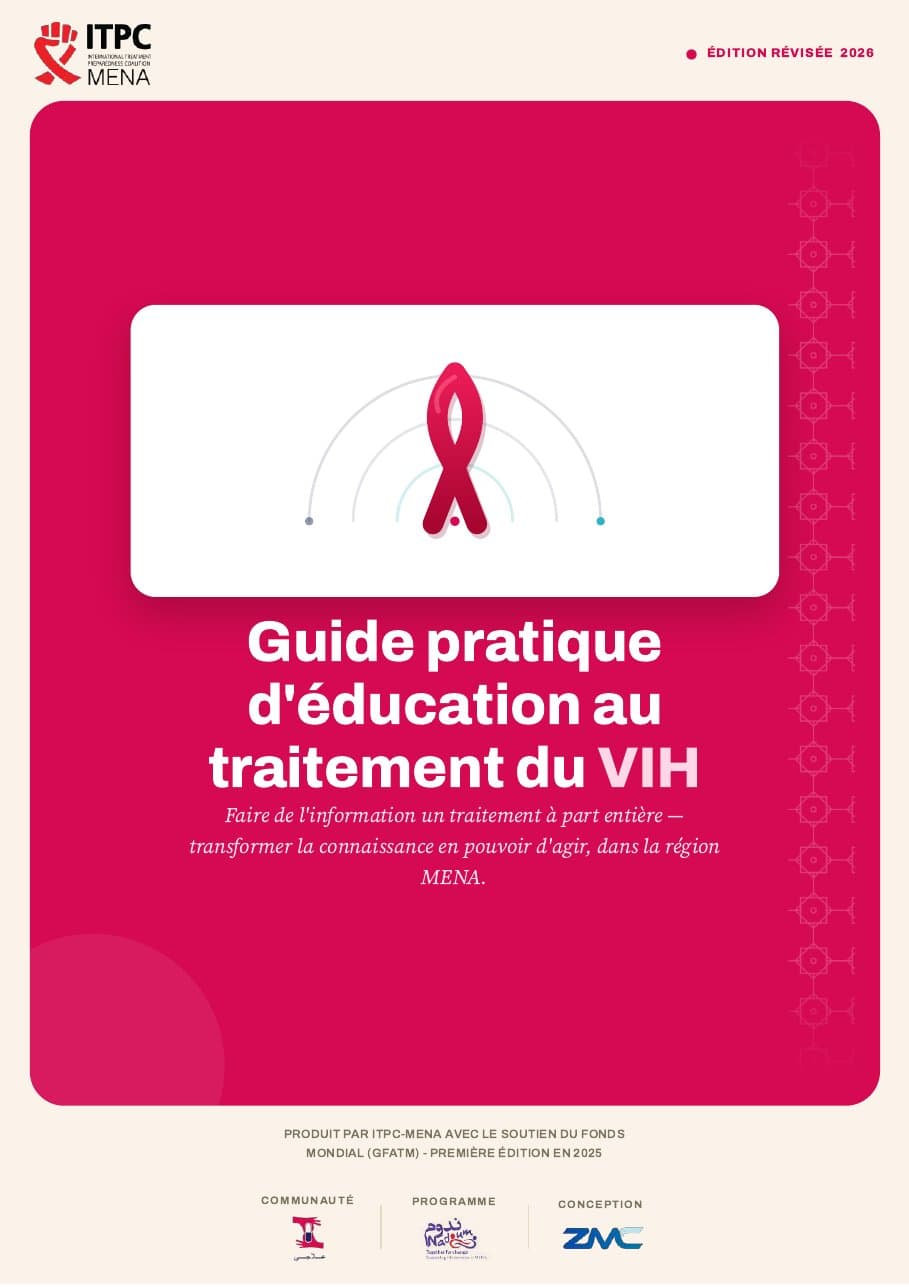
Guide pratique d'éducation au traitement du VIH

Guide2026

This revised 2026 guide equips peer educators, community facilitators and people living with HIV with knowledge about HIV and its treatment. It combines medical information, peer education, Communication for Development, digital health and self-care. It promotes empowerment, confidentiality, human rights and action against stigma to improve access to care across the MENA region.

Intellectual property and access to medicines

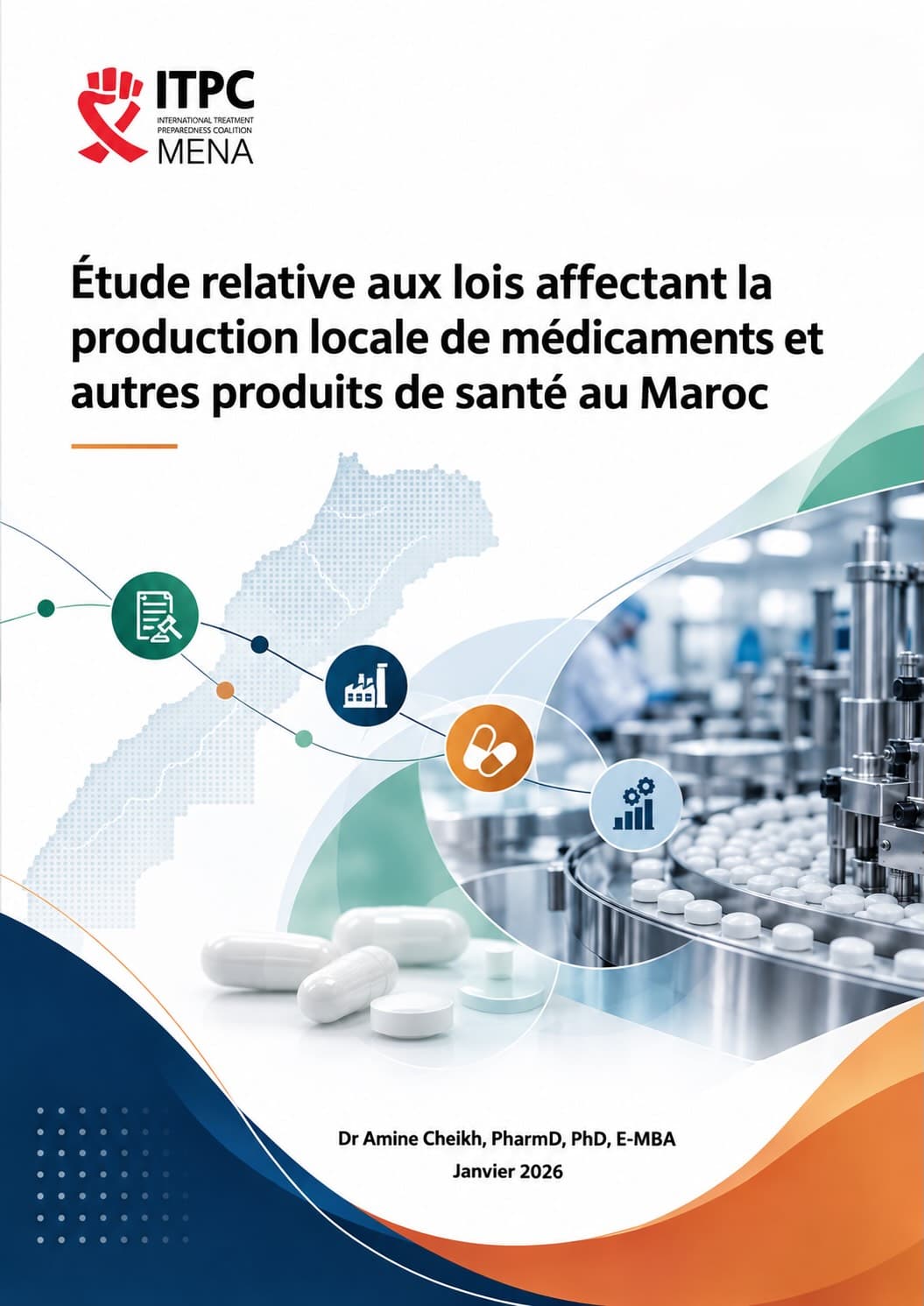
Étude relative aux lois affectant la production locale de médicaments et autres produits de santé au Maroc

Study2026· Morocco

This study examines the legal, regulatory and economic factors affecting local pharmaceutical production in Morocco, including marketing authorisations, pricing, taxation, intellectual property and investment. Despite a relatively comprehensive regulatory framework and an established pharmaceutical industry, significant barriers remain, limiting the growth of local production and its export potential.

Governance, advocacy and financing

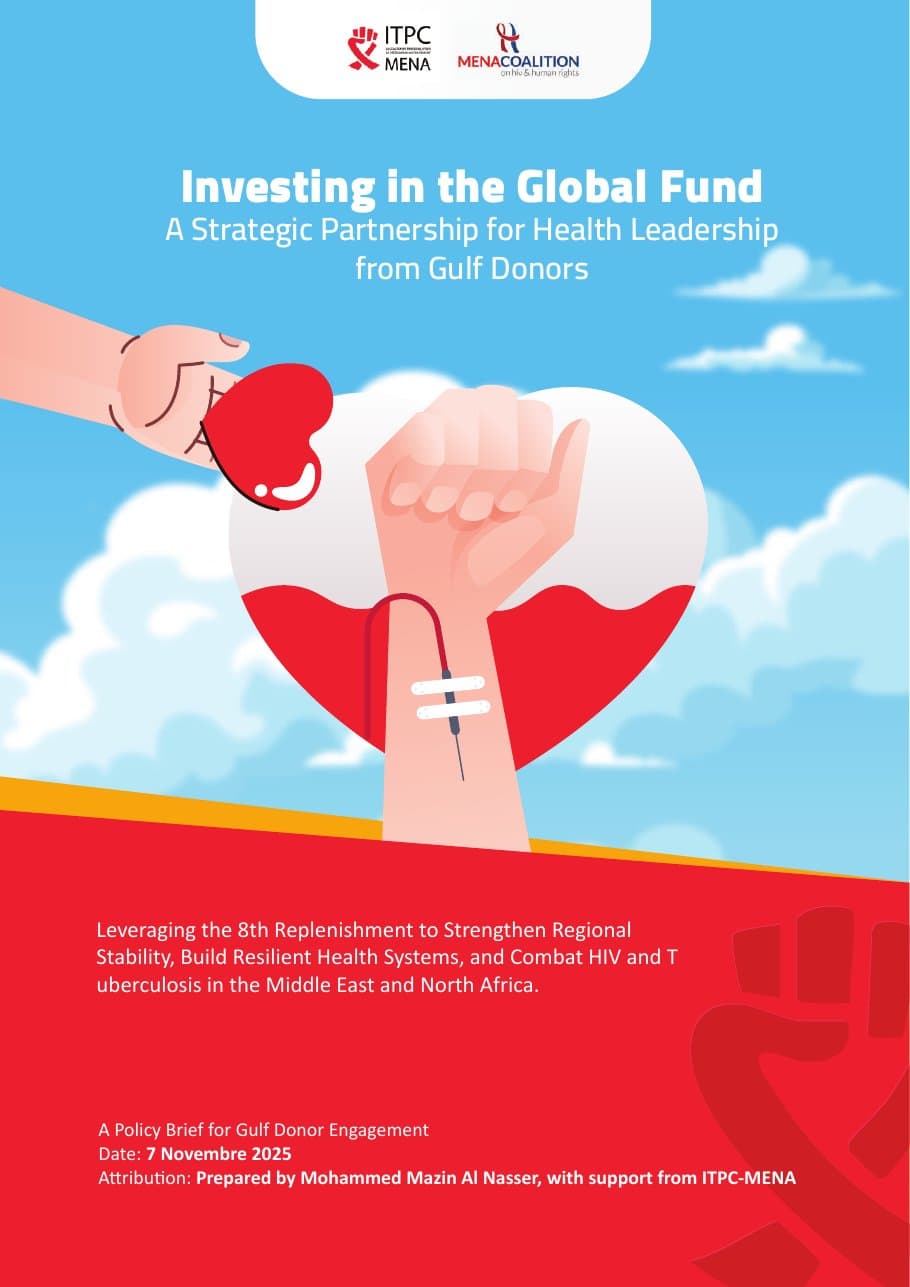
Investing in the Global Fund – A Strategic Partnership for Health Leadership from Gulf Donors

Policy brief7 November 2025

This policy brief proposes a strategic partnership between Gulf countries and the Global Fund to address HIV and tuberculosis in the MENA region. It presents the Eighth Replenishment as an opportunity to invest in regional health security, economic resilience and diplomatic leadership. Recommendations include increasing financial pledges, strengthening MENA representation in Global Fund governance and developing innovative financing mechanisms, including Debt2Health.

Community monitoring and observatories (FORSS)

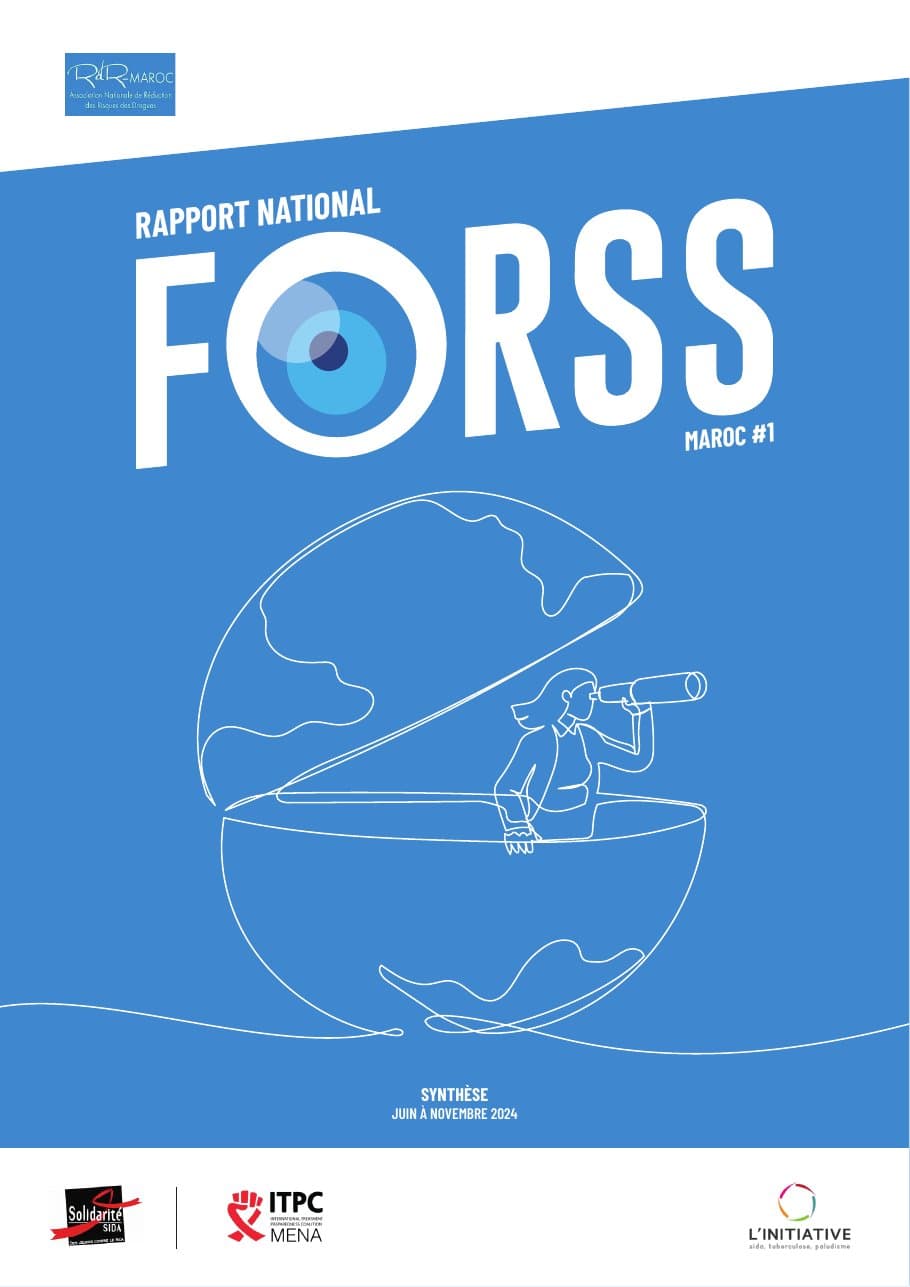
Rapport national #1 Maroc – Synthèse juin à novembre 2024

National report2025· Morocco

This report examines barriers to HIV-related services in Morocco, based on 992 questionnaires collected across six cities between June and November 2024. It highlights gaps in health coverage, limited awareness of testing and prevention methods, insufficient access to hepatitis B and C testing, and a lack of information on preventing mother-to-child transmission. It recommends bringing care closer to communities, strengthening awareness-raising and improving access to health coverage.

Community monitoring and observatories (FORSS)

Rapport national #1 Mauritanie – Synthèse juin à février 2024

National report2025· Mauritania

This report examines access to HIV-related services in Mauritania using quantitative and qualitative data collected across five cities. It highlights limited awareness of prevention and testing methods, barriers to accessing PrEP and internal condoms, and insufficient psychological support and complementary services. It recommends strengthening awareness, addressing stigma and improving support for people living with HIV.

Community monitoring and observatories (FORSS)

Rapport national #1 Tunisie – Synthèse juin à décembre 2024

National report2025· Tunisia

This report examines access to HIV-related services in Tunisia and highlights gaps in awareness of testing and prevention methods, particularly PrEP and PEP. Despite overall satisfaction with care, waiting times, lack of confidentiality, stigma and limited access to psychological support remain concerns. It recommends strengthening information, community-based prevention and healthcare worker training.

Community monitoring and observatories (FORSS)

Observatoires communautaires VIH MENA – Rapport régional #1 – Juin 2024 à avril 2025

Regional report2025· Morocco, Tunisia, Mauritania

This regional report analyses data from 4,523 respondents in Morocco, Tunisia and Mauritania. It highlights widespread stigma and violence, gaps in HIV knowledge and limited health coverage. Although 86% of people living with HIV have never interrupted treatment, multiple vulnerabilities increase the risks of discrimination and treatment interruption. The report calls for stronger rights protection, improved access to care and a stronger role for community observatories.

Access to care, stigma and rights

Accès à la santé des femmes dans la région MENA – Barrières, discriminations et exclusions intersectionnelles (Liban, Maroc, Tunisie, Mauritanie)

Study2025· Morocco, Tunisia, Mauritania, Lebanon

This study examines barriers to healthcare among 641 marginalised women in Lebanon, Morocco, Tunisia and Mauritania. It highlights the impact of costs, distance, transport barriers, stigma and discrimination in healthcare settings. Migrant women and those facing multiple vulnerabilities experience particularly severe exclusion. The report recommends universal health coverage, decentralised care, inclusive services and effective complaint mechanisms.

Governance, advocacy and financing

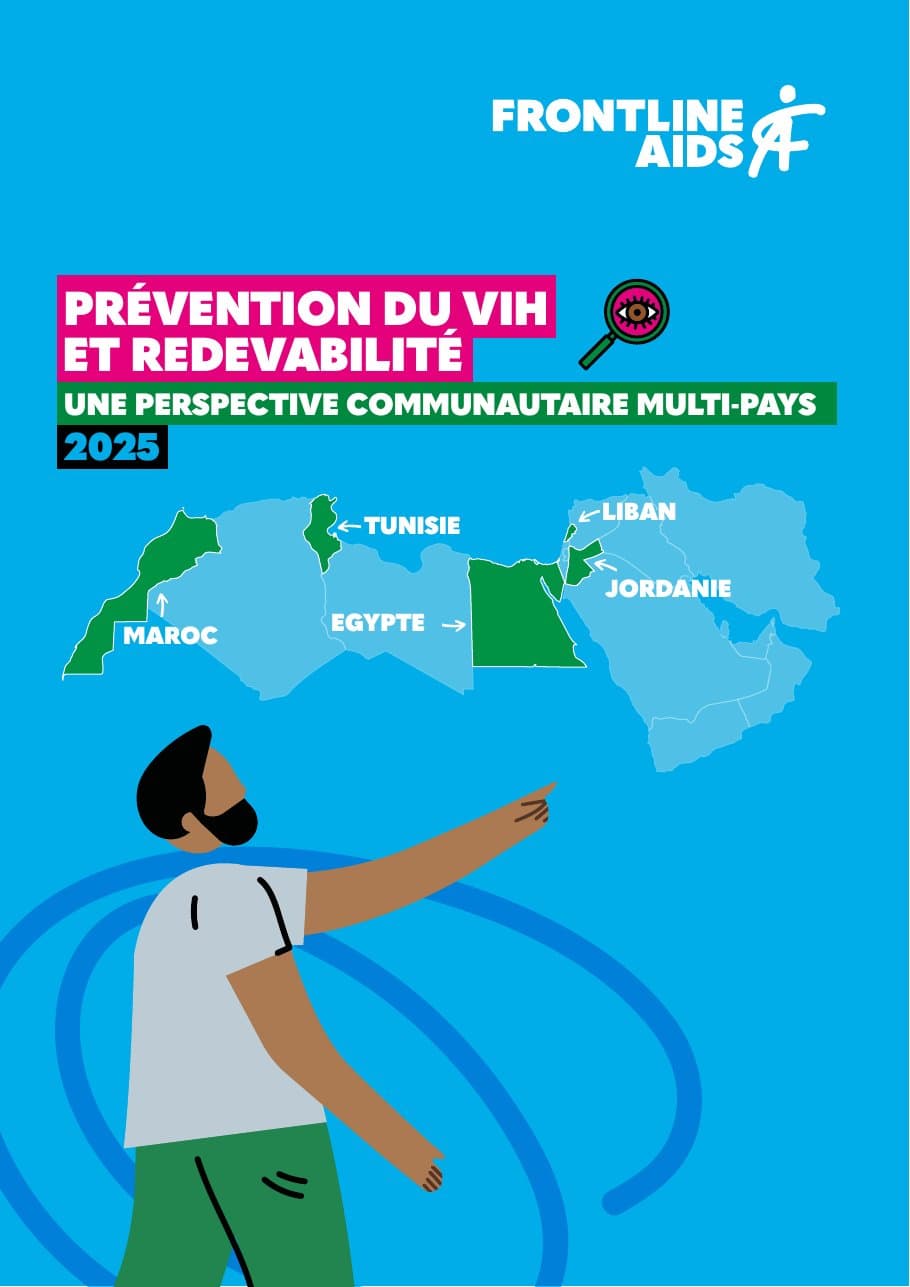
HIV Prevention & Accountability – A Multi-Country Community Perspective

Regional report2025· Morocco, Egypt, Tunisia, Lebanon, Jordan

This report examines HIV prevention and accountability in five MENA countries: Egypt, Jordan, Lebanon, Morocco and Tunisia. It highlights rising new infections, funding gaps, legal barriers and limited community participation in decision-making. It calls for stronger political leadership, sustainable financing, accessible services and greater integration of community-led approaches.

Evaluation and activity reports

Rapport annuel ITPC-MENA 2025

Annual report2025· Morocco, Tunisia, Mauritania

ITPC-MENA’s 2025 Annual Report highlights efforts to improve access to medicines, strengthen community-led advocacy, and reinforce community participation in health decision-making across the MENA region. Key achievements include the publication of the first regional FORSS report, based on community-generated data from Morocco, Tunisia and Mauritania; legal action challenging pharmaceutical patents; advocacy for local medicine production; and mobilisation around the Global Fund’s Eighth Replenishment. The report also documents regional coordination, community capacity-building, and initiatives promoting dialogue and inclusion through art.

COVID-19 impact and health systems

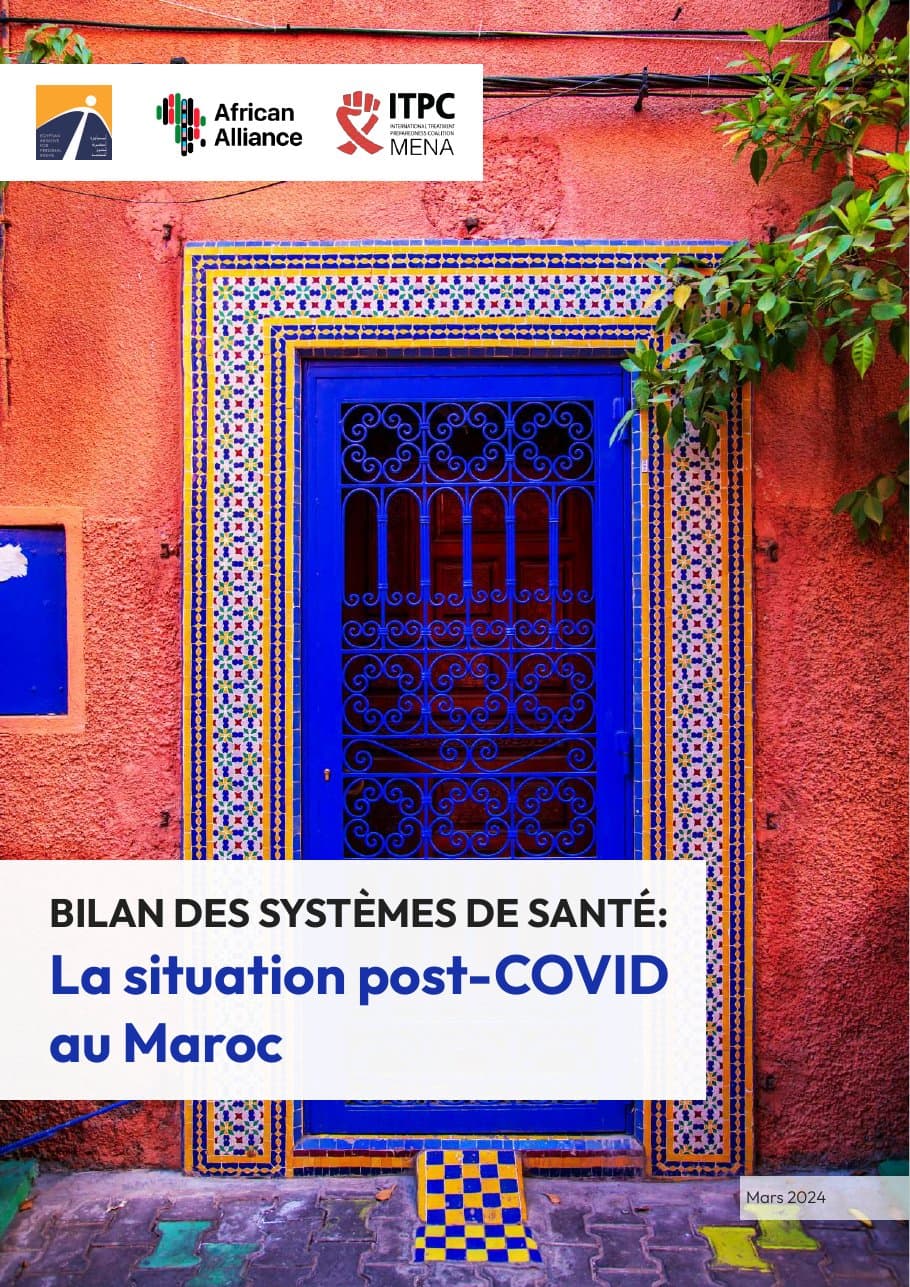
Health Systems Review: The Post COVID-19 Situation in Morocco

National reportMarch 2024· Morocco

This report assesses Morocco’s health system after the COVID-19 pandemic. It highlights regional inequalities in healthcare access, health workforce shortages, disruptions to essential services, and weaknesses in financing and governance. It also identifies progress in care quality and coordination. The report recommends strengthening health system resilience, improving resource management and ensuring more equitable access to healthcare.

Evaluation and activity reports

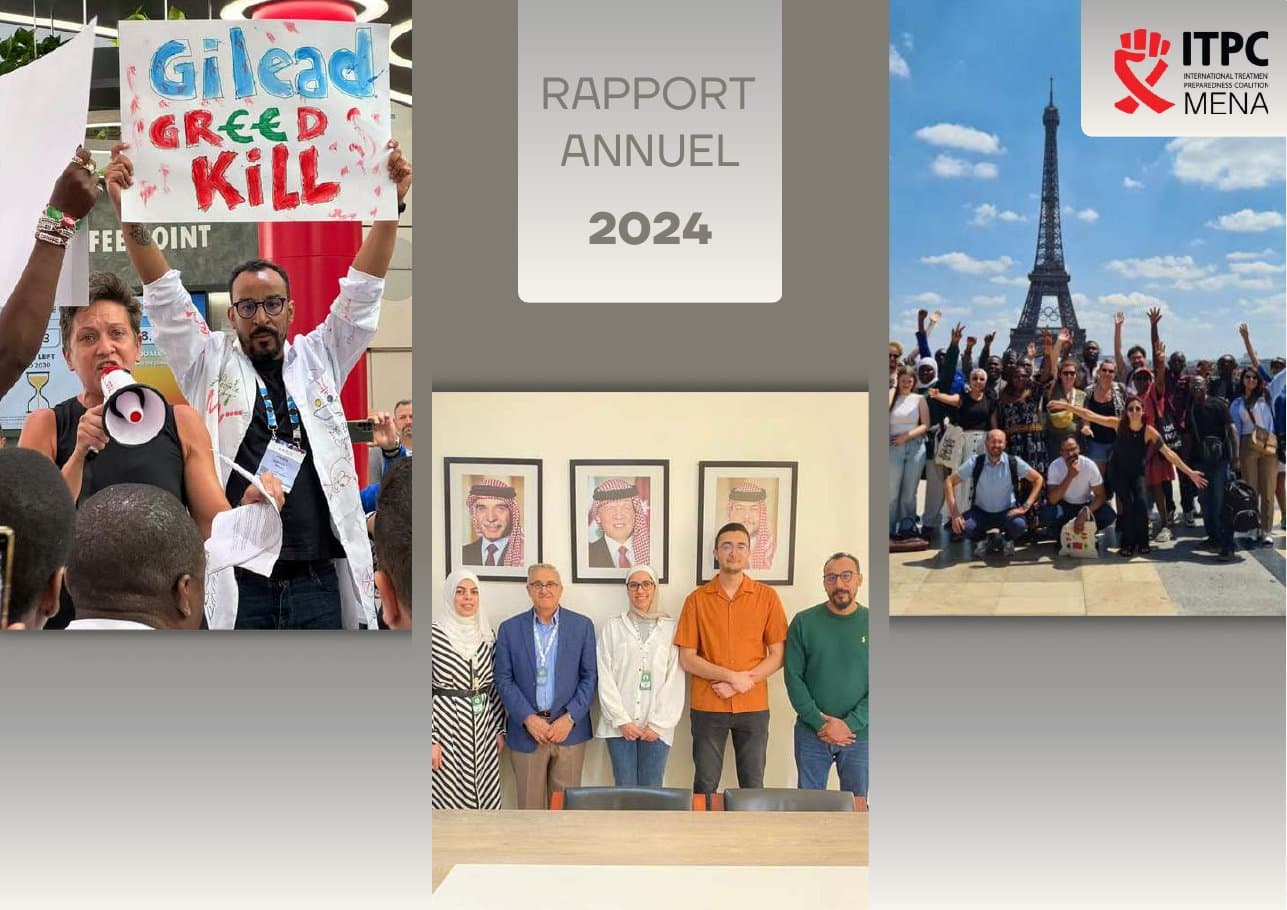
Rapport annuel ITPC-MENA 2024

Annual report2024

ITPC-MENA’s 2024 Annual Report presents activities aimed at improving access to treatment and defending the right to health across the MENA region. It highlights advocacy on intellectual property, community capacity-building through FORSS, community-led monitoring, the development of information resources, and support for people living with HIV through 3ILAJI and Life4me+. It also reflects regional and international efforts to promote equitable access to medicines and healthcare.

COVID-19 impact and health systems

Impact of the COVID-19 Health Crisis on Access to HIV Services in Egypt, Morocco, Mauritania and Tunisia

Research report2023· Morocco, Egypt, Tunisia, Mauritania

This study examines the impact of the COVID-19 crisis on access to HIV services in Egypt, Morocco, Mauritania and Tunisia. It highlights disruptions to testing, antiretroviral treatment, laboratory monitoring and psychosocial support, compounded by economic hardship, stigma and stock-outs. The report underscores the essential role of community-based organisations and recommends strengthening service continuity, coordination and emergency preparedness.

Intellectual property and access to medicines

Évaluation du cadre légal en matière de propriété intellectuelle et impact sur l'accès aux médicaments (Égypte, Maroc, Tunisie)

Study2023· Morocco, Egypt, Tunisia

This study examines the legal provisions that may facilitate or restrict access to medicines in Egypt, Morocco and Tunisia. It focuses on patentability, the duration of monopolies, compulsory licensing, parallel imports, data exclusivity, and the links between patents and marketing authorisations. Each provision is qualitatively assessed and scored to identify the available legal flexibilities for improving access to medicines.

Intellectual property and access to medicines

Étude de marché sur les ARV, AAD, Antituberculeux, COVID-19, réactifs et autres maladies opportunistes

Study2023· Morocco

In collaboration with the Ministry of Health and Social Protection, this study examines the availability, marketing, manufacturing and importation of medicines and diagnostic reagents used in Morocco to address HIV, tuberculosis, hepatitis C, COVID-19 and opportunistic infections. It highlights reliance on imports across several therapeutic categories, particularly antiretroviral medicines.

Evaluation and activity reports

Final Evaluation of the Project “Train, Monitor, Support: Community Mobilization to Fight HIV in the MENA Region – FORSS” (2018-2022 / L'Initiative-Expertise France)

Evaluation reportJuly 2022

This report evaluates the FORSS project, which aims to strengthen community engagement in the HIV response across five MENA countries. It reviews training, community-led monitoring of healthcare access, advocacy and support for vulnerable populations during COVID-19. It confirms the value of these observatories and recommends strengthening their sustainability, partner coordination and use of data to improve access to care.

Community monitoring and observatories (FORSS)

Programme FORSS – Observatoires communautaires VIH – Rapport National Maroc

National report2022· Morocco

This report presents findings from the first FORSS community-led monitoring data collection in Morocco, conducted between November 2021 and January 2022 across five cities. It highlights barriers to HIV prevention, testing and treatment, including limited information, distance to services, treatment delays, stigma and discrimination. It recommends strengthening treatment education, targeted prevention and support for people living with HIV.

Access to care, stigma and rights

Indice de stigmatisation des personnes vivant avec le VIH 2.0 au Maroc 2022

National report2022· Morocco

This study examines stigma and discrimination experienced by 632 people living with HIV in Morocco. Despite a decline in reported discrimination compared with 2016, internalised stigma remains significant, with shame, guilt and isolation affecting social life and access to care. Key populations face greater exposure. The report recommends strengthening communication, training, governance and human rights protection mechanisms.

Treatment education and access to medicines

نفاد المخزون – تحليل وضعية مناطق نفاد المخزون

Regional report28 December 2021· Morocco, Tunisia, Lebanon, Algeria

This report examines stock-outs of antiretroviral medicines, HIV testing products and other HIV-related medical supplies in the MENA region, based on consultations conducted in Algeria, Lebanon, Morocco and Tunisia. It outlines their main causes and consequences for people living with HIV and health systems. It offers practical recommendations to improve stock management, secure supply chains, strengthen financing and support community-led advocacy to ensure continuous access to essential medical products.

Community monitoring and observatories (FORSS)

Programme FORSS – Observatoires communautaires VIH – Rapport National Égypte

National report2021· Egypt

This report presents findings from the first three rounds of data collection under the FORSS community-led monitoring mechanism in Egypt, conducted in Cairo and Alexandria in 2021. It highlights barriers to HIV prevention, testing and treatment, including limited information, difficulties accessing services, loss to follow-up and stigma. It recommends strengthening targeted prevention, testing centres and laboratory monitoring.

Community monitoring and observatories (FORSS)

Programme FORSS – Observatoires communautaires VIH – Rapport National Mauritanie

National report2021· Mauritania

This report presents findings from the first two rounds of FORSS community-led monitoring data collection in Mauritania, conducted in 2021 in Nouakchott, Nouadhibou and Rosso. It highlights barriers to HIV services, including stock-outs, distance to health centres, limited information, delays in care and discrimination. It recommends strengthening targeted prevention, treatment education, community-based testing and service accessibility.

Treatment education and access to medicines

Guide communautaire aux lignes directrices du traitement du VIH de l'OMS

GuideOctober 2020

This guide presents WHO recommendations on HIV testing, prevention and treatment through a community-centred approach. It covers PrEP, antiretroviral therapy, adherence, drug resistance and differentiated service delivery. It emphasises the meaningful involvement of people living with HIV in health-related decisions to strengthen their rights, autonomy and access to appropriate care.