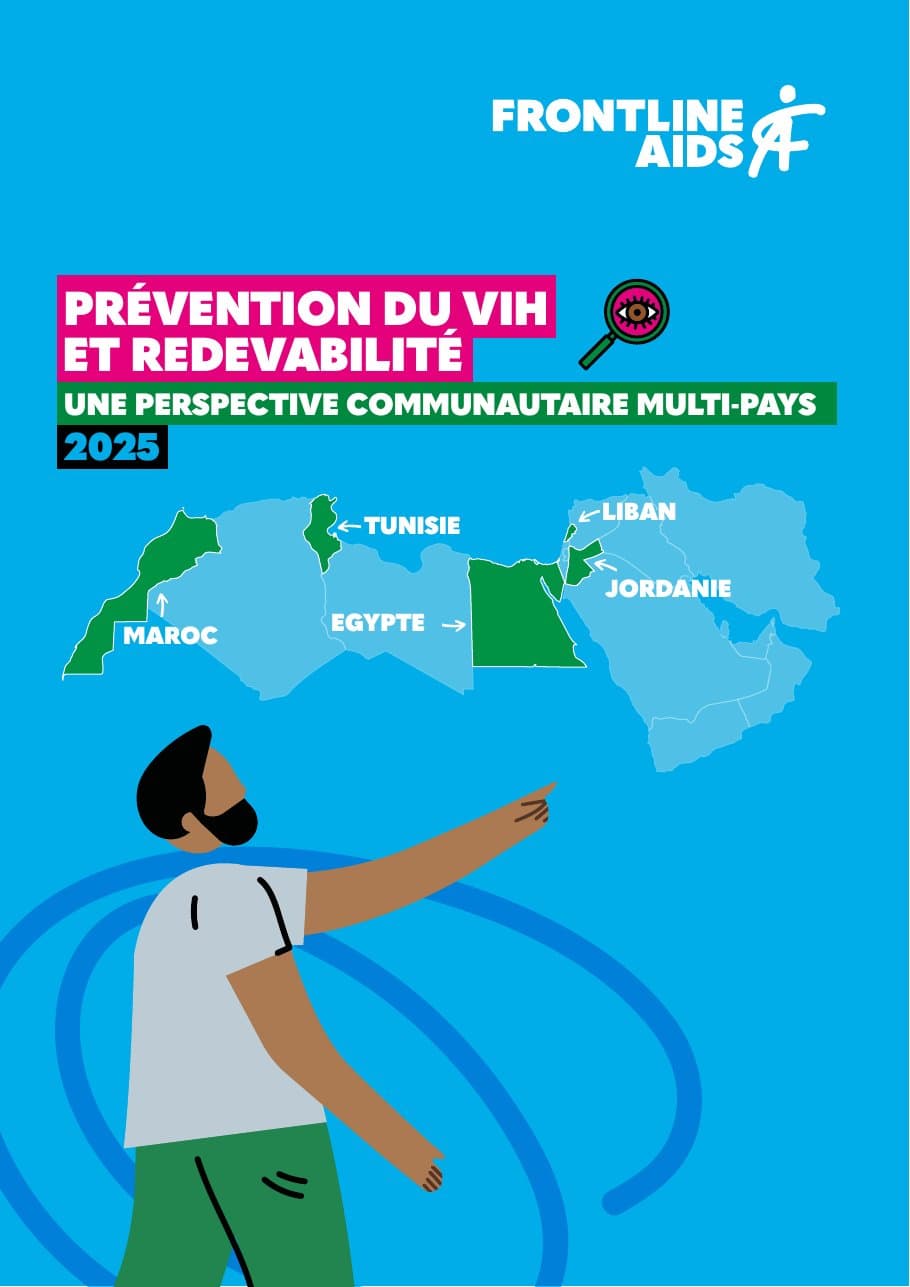
Regional report : HIV Prevention & Accountability – A Multi-Country Community Perspective
Governance, advocacy and financing

HIV Prevention & Accountability – A Multi-Country Community Perspective

Type
Regional report
Published
2025
Countries
Morocco, Egypt, Tunisia, Lebanon, Jordan
Language
Français · English · العربية

This report examines HIV prevention and accountability in five MENA countries: Egypt, Jordan, Lebanon, Morocco and Tunisia. It highlights rising new infections, funding gaps, legal barriers and limited community participation in decision-making. It calls for stronger political leadership, sustainable financing, accessible services and greater integration of community-led approaches.

Available versions

  • Prévention du VIH et redevabilité – Une perspective communautaire multi-paysFrançaisPDF · 0.7 MB
  • HIV Prevention & Accountability – A Multi-Country Community PerspectiveEnglishPDF · 0.8 MB
  • الوقاية من فيروس نقص المناعة البشرية والمساءلة حوله – منظور مجتمعي متعدد البلدانالعربيةPDF · 0.9 MB
On the same topic

Governance, advocacy and financing

Defining, Not Receiving – Perspectives on Health Governance Reform in the Middle East & North Africa

Research reportJuly 2026

This report examines health governance challenges in the MENA region, including institutional fragmentation, underfunded prevention and limited civil society participation in decision-making. It highlights the gap between evidence and policy implementation, as well as the impact of conflict and displacement. It calls for stronger regional coordination, needs-based health financing and institutionalised community participation.

Governance, advocacy and financing

Investing in the Global Fund – A Strategic Partnership for Health Leadership from Gulf Donors

Policy brief7 November 2025

This policy brief proposes a strategic partnership between Gulf countries and the Global Fund to address HIV and tuberculosis in the MENA region. It presents the Eighth Replenishment as an opportunity to invest in regional health security, economic resilience and diplomatic leadership. Recommendations include increasing financial pledges, strengthening MENA representation in Global Fund governance and developing innovative financing mechanisms, including Debt2Health.